On This Page
Small Business Saturday Marketing Ideas That Drive Local Sales
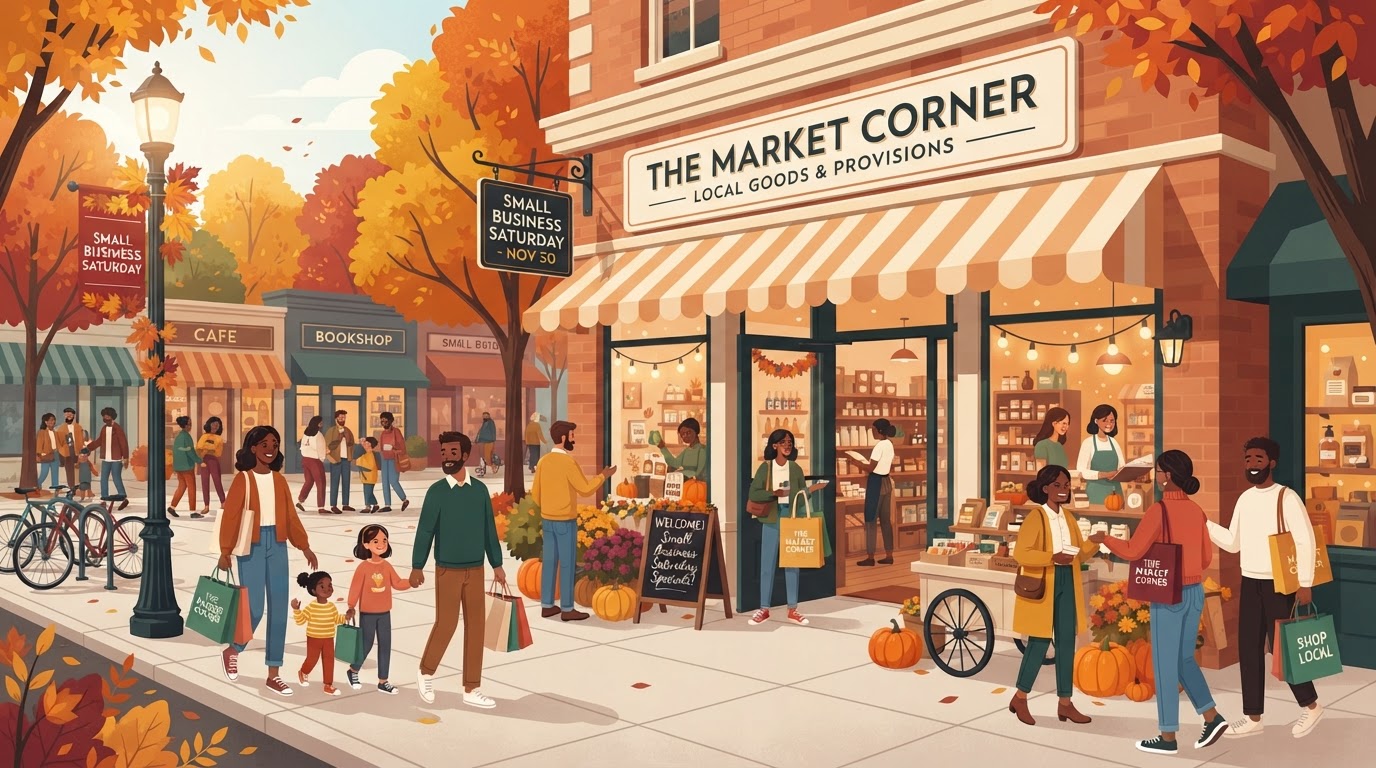
Small Business Saturday is one of the few marketing moments built specifically for independent, local businesses — and the service businesses that plan for it consistently outperform those that wing it. The day generates a surge of intentional, community-minded shoppers who want to spend locally, but capturing that demand requires more than a sandwich board on the sidewalk. This guide breaks down the marketing ideas that actually drive local sales for service businesses on Small Business Saturday, with a pre-event automation plan so no lead, booking, or follow-up slips through the cracks. You can also see our live [Small Business Saturday promotion page](/promotions/small-business-saturday) for the current offer details.
01Why Small Business Saturday Matters for Service Businesses
Small Business Saturday falls on the Saturday after Thanksgiving, sandwiched between Black Friday and Cyber Monday. While those two days dominate national retail and e-commerce, Small Business Saturday is deliberately local — consumers are encouraged to shop at independent businesses in their own communities. According to the Small Business Saturday Consumer Insights Survey, the day has driven an estimated $200+ billion in spending since its inception, and a significant share goes to local service businesses, not just retail.
For service businesses — clinics, salons, contractors, law firms, auto shops — the opportunity is different from retail. You're not selling a discounted product off a shelf; you're capturing bookings, consultations, and project inquiries that convert over weeks or months. The goal on Small Business Saturday isn't a single day of revenue — it's capturing the surge of local demand into your pipeline so it converts throughout December and January.
The businesses that win are the ones that treat the day as a campaign, not an event. A one-day promotion with no follow-up captures a fraction of the opportunity; a campaign with pre-event teasers, day-of capture, and post-event nurture captures the full surge. Our small business automation guide covers the general framework; this guide adapts it to the Small Business Saturday context.
02The Small Business Saturday Marketing Checklist
Here's the complete marketing checklist, organized by phase, with timing and cost:
| # | Marketing Idea | Phase | Deploy By | Cost |
|---|---|---|---|---|
| 1 | Early-bird booking offer | Pre-event | 2 weeks before | $0 |
| 2 | Email teaser sequence | Pre-event | 2 weeks before | $0–$100 |
| 3 | SMS campaign to existing customers | Pre-event | 1 week before | $50–$200 |
| 4 | Google Business Profile update | Pre-event | 2 weeks before | $0 |
| 5 | Landing page with Saturday offer | Pre-event | 2 weeks before | $0–$50 |
| 6 | Day-of instant lead response | Day-of | Day of | $50–$200 |
| 7 | Review request automation | Post-event | Day after | $0–$50 |
| 8 | Post-event nurture sequence | Post-event | 1 week after | $0–$100 |
Items 1–5 build demand before the day. The early-bird offer gives customers a reason to book now rather than wait. The email and SMS campaigns reach your existing customer base — the people most likely to support a local business. The Google Business Profile update ensures you appear in local 'near me' searches, which spike on Small Business Saturday. The landing page gives the campaign a dedicated destination.
Items 6–8 capture and convert the demand. Day-of instant response ensures no inquiry goes unanswered during the surge. Review requests turn happy Saturday customers into social proof. The post-event nurture sequence converts one-time Saturday visitors into repeat customers — which is where the long-term value lives. Our missed-call text-back automation guide covers the SMS architecture that powers items 3 and 6.
03Pre-Event: Building Demand Two Weeks Out
Start the campaign two weeks before Small Business Saturday. The goal is to build awareness and capture early bookings so the day itself isn't your only revenue moment.
Early-bird booking offer. Create an offer that incentivizes booking before the day — a discount on a December appointment, a free add-on service, or a bundled package. The key is scarcity: 'Book by Small Business Saturday and get [offer].' This pulls demand forward and fills your calendar before the rush. For service businesses, a booked calendar is more valuable than walk-in traffic, because bookings are committed revenue.
Email teaser sequence. Send a 3-email sequence: a 'save the date' announcement two weeks out, a 'here's what we're offering' email one week out, and a 'last chance to book early' email two days before. Each email links to the landing page where customers can book directly. According to Constant Contact's small business email research, segmented email campaigns to existing customers have open rates of 40%+ — far higher than cold outreach.
SMS campaign. Text your existing customer base with the Saturday offer. SMS has a 98% open rate and most messages are read within 3 minutes, making it the most reliable way to reach local customers. Keep it short and actionable: 'Small Business Saturday is [date] — book by then for [offer]. Reply to book.' Our TCPA and AI texting compliance guide covers the consent and opt-out requirements you must follow before sending any SMS campaign.
04Day-Of: Capturing the Surge
On Small Business Saturday, the priority shifts from building demand to capturing it. Every inquiry, call, and walk-in must be captured into your pipeline — because the surge is temporary and the leads you miss today won't come back tomorrow.
Instant lead response. When a customer submits a form, sends a message, or calls, an automated response acknowledges them instantly — even if you're busy with in-person customers. An AI chatbot on your website handles FAQs and captures leads 24/7; an automated email or SMS confirms receipt and sets expectations. This is the difference between a lead that waits and a lead that leaves. Our lead response time automation guide covers the architecture for sub-60-second response.
Missed-call text-back. If you're busy with customers and miss a call, an automated SMS goes out within seconds: 'Hi, thanks for calling [business]! We're helping other customers right now but we'll call you back shortly. In the meantime, you can book online at [link].' This recovers the lead while they're still holding their phone — before they call the next business on Google.
Google Business Profile. Ensure your profile is updated with Saturday hours, the offer, and a post linking to your landing page. Local 'near me' searches spike on Small Business Saturday, and your Google Business Profile is the most visible result for those searches. A complete, updated profile with photos, hours, and an offer post captures significantly more local traffic than a bare listing.
05Post-Event: Converting Saturday Visitors to Repeat Customers
The real ROI of Small Business Saturday isn't the day itself — it's the customers who return. Post-event follow-up is what converts one-time Saturday visitors into repeat customers, and it's the step most businesses skip.
Review request automation. After each Saturday service is completed, an automated SMS sends a review request with a direct link to your Google review page. Saturday customers are in a positive, community-minded frame of mind — they're more likely to review than average. Businesses that automate review requests see a 3–5x increase in review volume, and reviews are a top factor in local search visibility for the rest of the year.
Post-event nurture sequence. Enroll every Saturday lead (booked or not) in a nurture sequence: a thank-you message the day after, a value-add tip or resource the following week, and a 'come back' offer two weeks later. This keeps your business top-of-mind during the holiday season, when customers are making decisions about services they'll need in January and beyond. Our business processes to automate guide covers these sequences as processes #13–14.
Re-engagement of no-shows. For customers who booked but didn't show, an automated rebooking sequence triggers within 30 minutes: a friendly message acknowledging the missed appointment and a link to rebook. This recovers 40–60% of no-shows that would otherwise be permanently lost — and on Small Business Saturday, every booking matters.
06Failure Cases and Limitations
The most common failure is treating Small Business Saturday as a one-day event with no follow-up. A business runs a Saturday promotion, gets a surge of inquiries, and then... nothing. No nurture sequence, no review requests, no re-engagement. The leads go cold within a week, and the day's effort produces minimal long-term value. The fix: build the full campaign — pre-event, day-of, and post-event — so the surge is captured and converted over weeks, not lost in a day.
The second failure is offering a discount that erodes margin without driving bookings. A deep discount attracts deal-seekers who won't return at full price, and it trains existing customers to wait for the next promotion. The fix: offer value-adds (a free add-on service, a bundled package) rather than straight discounts. Value-adds preserve your pricing integrity while still giving customers a reason to book. Our CRM migration checklist guide covers the data hygiene needed to track which Saturday customers return at full price — the metric that tells you whether your offer strategy is working.
A limitation to acknowledge: Small Business Saturday is inherently local. If your business doesn't serve a local community — you're fully remote or national — the day's community-shopping angle doesn't apply, and a generic promotion will underperform. The ideas in this guide are designed for businesses with a local service area, where the 'shop local' sentiment drives real demand.
07An Anonymized Example from Our Work
A med spa in a mid-sized California city had participated in Small Business Saturday for three years with modest results — a busy day, but no lasting impact. The problem: they ran a one-day discount with no follow-up, and the surge of inquiries evaporated within a week.
We built the full campaign: a pre-event email and SMS sequence to their existing customer base offering a bundled package (facial + add-on) for bookings made by Saturday, a landing page with self-serve booking, day-of instant response with an AI chatbot and missed-call text-back, and a post-event nurture sequence with automated review requests. The result: 47 bookings captured on Saturday (up from 18 the prior year), 32 reviews generated within two weeks, and 19 of the 47 Saturday customers returned for a full-price service within 90 days. The post-event nurture sequence — the piece they'd never had before — was the single biggest driver of long-term value. The automation stack cost $180/month and paid for itself within the first week of December.
08Turning Saturday Into a Campaign
Small Business Saturday is a gift to local businesses — a day when consumers actively want to spend locally. But capturing that demand requires a campaign, not an event. The checklist above — pre-event demand building, day-of capture, and post-event nurture — ensures every lead, booking, and review is captured and converted over weeks, not lost in a day. If you're ready to build the automation that makes this campaign run itself, our automation audit and consulting service maps your business to this plan. And for the current Small Business Saturday offer details, visit our promotion page. Because the best Small Business Saturday strategy is the one that turns one day of community goodwill into a year of repeat customers.
Key Takeaways
- Small Business Saturday drives $200B+ in local spending — for service businesses, the goal is capturing bookings into your pipeline, not single-day revenue.
- Build a full campaign: pre-event teasers (2 weeks out), day-of capture, and post-event nurture — a one-day event with no follow-up captures a fraction of the opportunity.
- SMS campaigns to existing customers have a 98% open rate — the most reliable way to reach local demand, but follow TCPA consent rules.
- Post-event nurture and review requests convert one-time Saturday visitors into repeat customers — this is where the long-term value lives.
- Offer value-adds rather than straight discounts to preserve pricing integrity and avoid training customers to wait for deals.

Written by Moise
Founder & Lead Automation ArchitectMoise is the founder and lead automation architect at Wootomatic. With over a decade of hands-on experience designing, implementing, and maintaining high-throughput business automations, CRM pipelines, and custom AI agents, he has architected mission-critical workflows for hundreds of appointment-based and field-service businesses. His focus is on resilient, monitored systems that produce measurable ROI without fragile software bloat.
Ready to Put This Into Action?
Tell us about your workflow and we'll scope a custom automation within 24 hours.