On This Page
Contractor Lead Follow-Up Automation: A Workflow for Quotes, Reminders, and Reviews
Contractors have the most chaotic lead follow-up process of any industry. A homeowner calls about a roof leak, the contractor is on a job site and can't answer, the homeowner calls the next contractor on Google, and a $8,000 roof job goes to whoever picked up the phone. When the contractor does respond, the quote process takes days — scheduling a site visit, preparing an estimate, sending it, waiting for a response, following up — and at every step, a faster competitor can swoop in. After automating lead follow-up for contractors across trades — roofing, plumbing, HVAC, electrical, remodeling — the pattern is clear: speed and consistency win jobs, and automation delivers both. This guide covers the specific workflows that transform contractor lead from chaos to a system: instant quoting, appointment reminders, review collection, and the re-engagement sequences that turn one-time jobs into recurring revenue.
01The Contractor Lead Follow-Up Problem
Contractors lose jobs at three predictable points. First, the missed call: the contractor is on a job site, the homeowner calls, and the call goes to voicemail. The homeowner doesn't leave a message — they call the next contractor, and the job is gone before the contractor checks their phone at lunch. Second, the slow quote: the contractor visits the site, goes home, prepares the estimate in the evening, and sends it the next day. Meanwhile, a faster competitor sent a same-day estimate. Third, the forgotten follow-up: the quote is sent, the homeowner is 'thinking about it,' and the contractor never follows up — so the homeowner hires whoever called them back.
Each of these is solvable with automation, and the ROI is immediate. A roofing contractor we worked with deployed missed-call text-back and instant quoting and increased their close rate from 22% to 41% in three months — not because they got better at roofing, but because they responded faster and more consistently than the competition. According to Angi's contractor research, 68% of homeowners hire the first contractor who responds to their inquiry — speed is the single biggest competitive advantage.
The automation stack that solves this is not complex — it's a combination of missed-call text-back, instant quote acknowledgment, automated appointment reminders, and post-job review collection. Each workflow deploys in days and compounds with the others. The business processes to automate before hiring framework applies directly — contractors are the canonical example of a business that should automate before hiring a dedicated salesperson.
02Instant Quote Acknowledgment and Triage
The instant a lead comes in — by phone, form, or chatbot — an automated response goes out within 60 seconds. The response acknowledges the inquiry, sets expectations ('we'll have a quote to you within 24 hours'), and triages the lead: is this an emergency (water leaking, no heat, electrical issue) or a planned project (remodeling, new roof)? Emergencies are flagged for immediate callback; planned projects enter the standard quote workflow.
For emergencies, the automation sends an immediate SMS: 'We received your message about [emergency type]. [Contractor name] will call you within 30 minutes — or call us now at [number].' The emergency flag triggers a high-priority notification to the contractor's phone, cutting through the noise of standard leads. This triage — automated based on the lead's description of the problem — ensures that a homeowner with a burst pipe doesn't wait behind a homeowner planning a kitchen remodel. The lead response time automation framework's sub-60-second response pattern applies directly, with the emergency routing as the high-priority variant.
For planned projects, the automation sends an acknowledgment with the next steps: 'Thanks for your inquiry about your roofing project! We'd like to schedule a site visit to provide an accurate quote. Here's a link to our calendar — pick a time that works for you.' The site visit is booked automatically, eliminating the phone-tag that typically delays estimates by days.
03Site Visit and Estimate Automation
The site visit is where most contractors lose time — scheduling it, reminding the homeowner, preparing the estimate, and sending it. Automate the entire sequence: the site visit is booked via the calendar link, the homeowner receives an automated reminder 24 hours and 1 hour before, and the contractor receives a notification with the site address, project description, and a link to map directions.
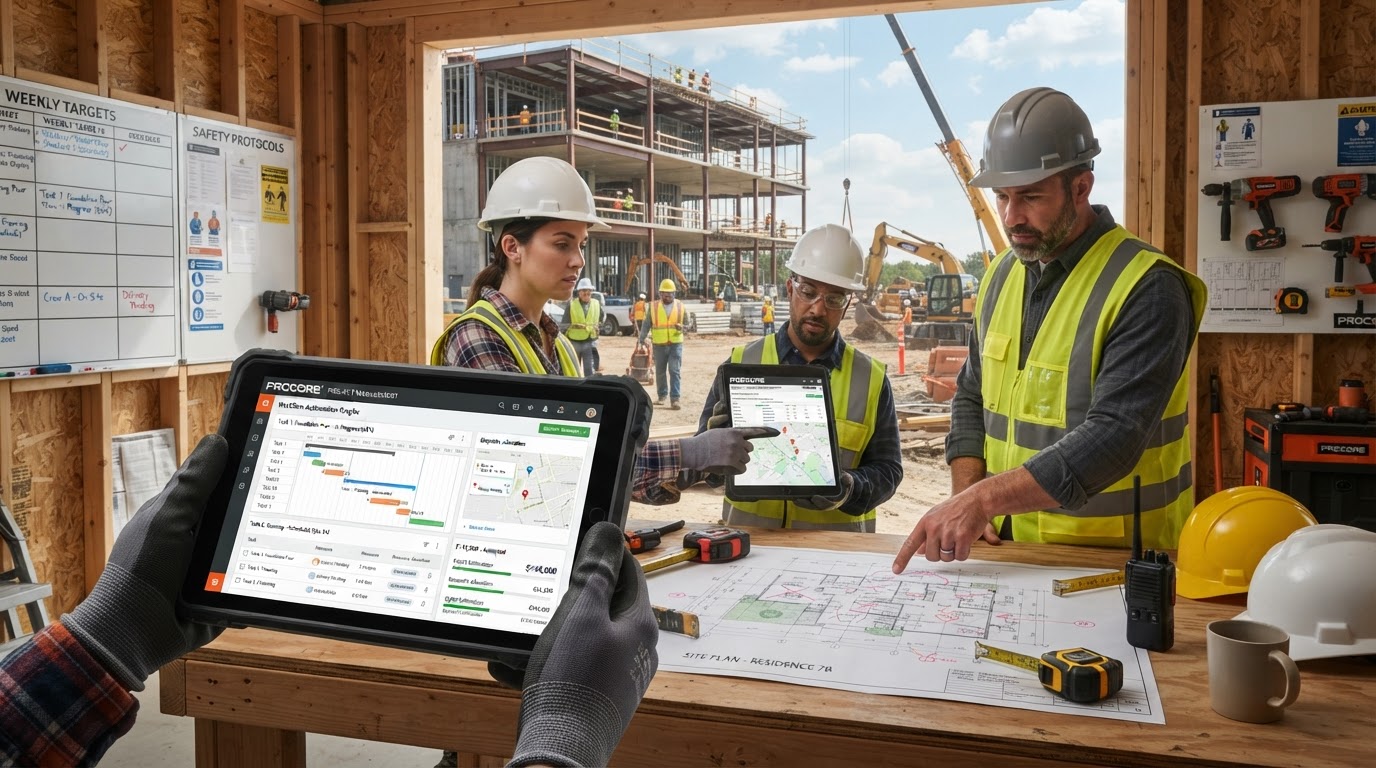
During the site visit, the contractor captures the estimate using a mobile form (on their phone or tablet) that includes standard line items, materials, labor, and a template for the scope of work. The form data flows into the CRM and automatically generates a branded estimate PDF that's emailed to the homeowner within minutes — not days — of the site visit. This single change — same-day estimate delivery — typically increases close rates by 25–40% because it capitalizes on the momentum of the site visit. A homeowner who receives a professional estimate the same evening is far more likely to sign than one who waits a week.
The estimate follow-up sequence: if the homeowner doesn't respond within 48 hours, an automated follow-up goes out: 'Hi [name], following up on the estimate we sent for your [project type]. Any questions? We're happy to adjust the scope or discuss timing — just reply here.' This sequence runs for 14 days with 3–4 touches, then moves the lead to a long-term nurture sequence (monthly check-ins) rather than abandoning it. The missed-call text-back automation framework covers the multi-touch follow-up pattern that's equally effective for estimate follow-up.
04Job Scheduling and Reminders
Once the estimate is accepted, the job scheduling automation takes over. The signed estimate triggers: job creation in the CRM, calendar booking for the job dates, an automated confirmation to the homeowner ('Your [project] is scheduled for [dates]. We'll arrive between [time] — here's what to expect'), and a 24-hour reminder before the job starts. This eliminates the manual scheduling and confirmation that contractors typically handle by phone and email, and it ensures the homeowner is prepared when the crew arrives.
For multi-day jobs, an automated end-of-day update keeps the homeowner informed: 'Day 1 complete — we finished [milestone] and will continue tomorrow.' This communication reduces the inbound 'how's it going?' calls that interrupt the crew and reassures the homeowner that the job is progressing. For contractors managing multiple simultaneous jobs, this automated communication is the difference between a controlled operation and a chaotic one.
Post-job automation: when the job is marked complete in the CRM, the system automatically sends a satisfaction check-in ('How did we do?'), a review request ('We'd love a review — here's a link to our Google page'), and a follow-up offer for related services ('Need help with [related project]? We're offering [return-customer discount]'). The reputation and reviews AI service builds these post-job sequences with intelligent timing.
05Review Collection and Reputation
Reviews are the lifeblood of contractor businesses — 87% of homeowners check reviews before hiring a contractor, and the firms with the most recent, highest-rated reviews win the most jobs. Yet most contractors collect reviews haphazardly, relying on the homeowner to remember to leave one. Automated review collection changes this: after every completed job, an SMS with a direct link to the Google review page goes out within 24 hours, while the positive experience is still top of mind.
Contractors who automate review requests typically see a 3–5x increase in review volume within the first quarter. The key is the direct link — homeowners won't search for your Google page; they'll click a link. The SMS includes the link and a brief, genuine request: 'Hi [name], thanks for choosing us for your [project]! If you were happy with our work, a quick review helps us a lot — here's the link: [URL]. Thanks!' This is not pushy — it's a professional ask at the right moment.
Negative feedback interception: before sending the public review request, send a private satisfaction check-in. If the homeowner rates the job below 4 stars, suppress the public review request and route the feedback to the contractor immediately. This gives the chance to resolve the issue — a follow-up call, a return visit, a goodwill discount — before a negative review goes public. This single automation protects the reputation that takes years to build and minutes to damage. The automation ROI calculator framework helps quantify the revenue impact of reviews — each additional star on Google typically correlates with a 5–9% revenue increase for local contractors.
06Re-Engagement and Recurring Revenue
Most contractors treat every job as a one-time transaction — but the highest-revenue contractors build recurring revenue through re-engagement automation. The pattern: track every completed job in the CRM with the project type, completion date, and expected lifespan of the work. A roof lasts 15–20 years; an HVAC system 10–15 years; a water heater 8–12 years. At the appropriate interval (say, 10% before expected end-of-life), an automated re-engagement goes out: 'Hi [name], it's been [X] years since we installed your [system]. We recommend a maintenance check to extend its life — here's a link to schedule.'
This re-engagement is not pushy — it's a genuine service reminder that positions the contractor as the trusted expert. The homeowner who receives a timely maintenance reminder is far more likely to call the same contractor for the next job than to start the search over. And the maintenance visit itself often surfaces new work — a worn component, an upgrade opportunity, a related project — that turns a $150 service call into a $5,000 job.
Seasonal automation is another high-ROI pattern for contractors. HVAC contractors send automated reminders before heating and cooling seasons; roofers send gutter-cleaning reminders before fall; landscapers send spring cleanup reminders. These seasonal touches keep the contractor top of mind and generate predictable, recurring revenue. The business processes to automate before hiring framework covers the broader re-engagement pattern — for contractors, the seasonal and lifespan-based triggers are the highest-ROI variants.
Key Takeaways
- 68% of homeowners hire the first contractor who responds — speed and consistency are the single biggest competitive advantages.
- Instant quote acknowledgment with emergency triage ensures urgent jobs aren't queued behind planned projects.
- Same-day estimate delivery after the site visit increases close rates by 25–40% by capitalizing on momentum.
- Automated review collection within 24 hours of job completion generates 3–5x more reviews — the lifeblood of contractor lead generation.
- Re-engagement based on project lifespan and seasonal needs turns one-time jobs into predictable recurring revenue.

Written by Moise
Founder & Lead Automation ArchitectMoise is the founder and lead automation architect at Wootomatic. With over a decade of hands-on experience designing, implementing, and maintaining high-throughput business automations, CRM pipelines, and custom AI agents, he has architected mission-critical workflows for hundreds of appointment-based and field-service businesses. His focus is on resilient, monitored systems that produce measurable ROI without fragile software bloat.
Ready to Put This Into Action?
Tell us about your workflow and we'll scope a custom automation within 24 hours.
Start Your Automation Project