On This Page
Missed-Call Text-Back for Sanger HVAC Companies: How to Recover More Service Calls Automatically
A missed-call text-back system automatically sends a text message when an HVAC company cannot answer an incoming call. For a Sanger HVAC contractor, the best system does more than say, 'Sorry we missed you.' It can collect basic service details, verify whether the property is inside the service area, create a lead in the CRM, and alert the appropriate dispatcher. It should not diagnose dangerous conditions or promise an appointment that has not been confirmed — and it gives every missed call a second chance to become a booked job.
01Why Missed HVAC Calls Become Lost Opportunities
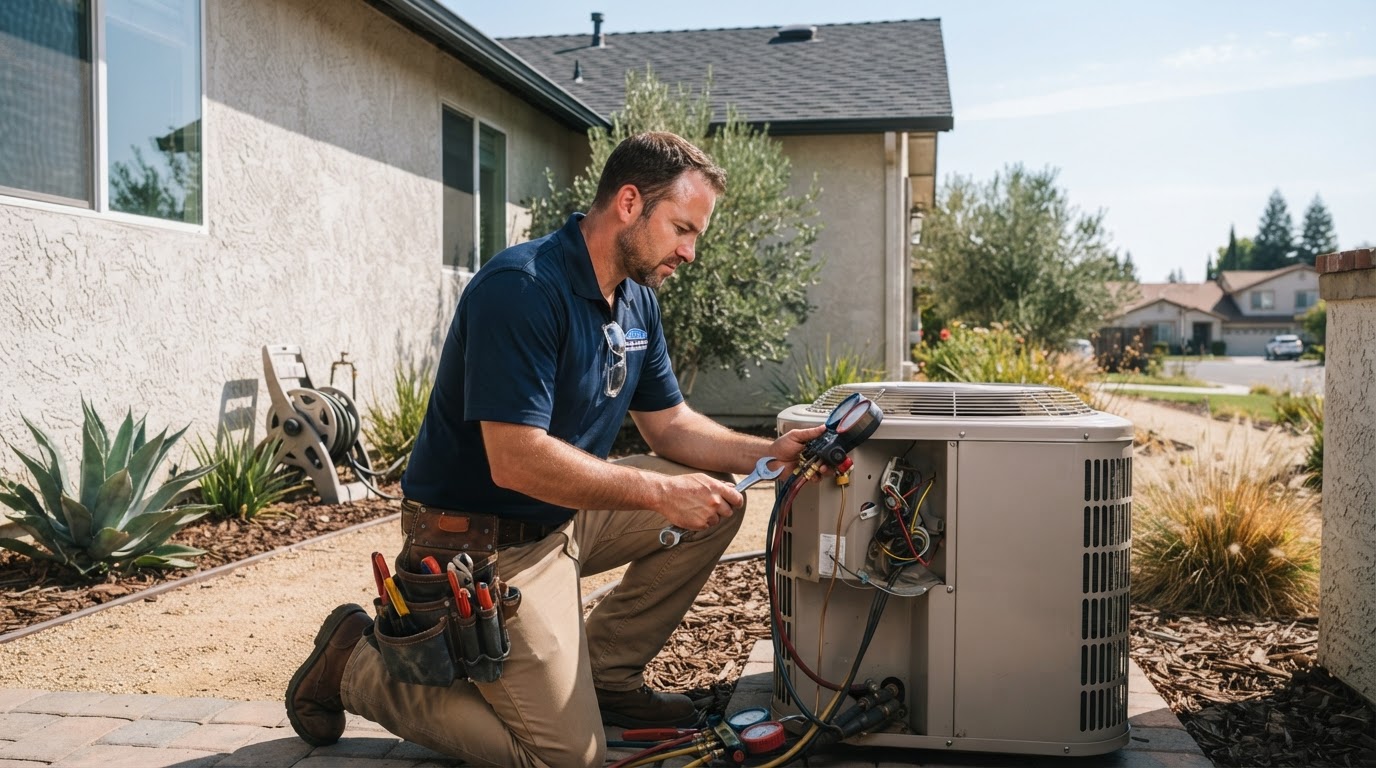
HVAC technicians do not work from quiet offices. They may be driving, inspecting equipment, working on a roof, or speaking with another customer. During periods of high demand, several calls may arrive close together, and even a staffed office can struggle to answer every one.
Voicemail places all the work on the caller. The person must leave a useful message and wait without knowing when someone will respond. A homeowner without heating or cooling may simply call the next contractor. An immediate text cannot guarantee the job, but it confirms that the call reached the company and gives the customer another way to continue the conversation.
This is especially common during seasonal demand spikes in the Central Valley, when a single hot stretch or cold snap can flood a small HVAC shop with calls. For the broader local context, see our Sanger service area page and our email and SMS marketing for Sanger businesses.
02How Missed-Call Text-Back Works
A properly configured workflow follows a controlled sequence:
- 1The business phone records an unanswered incoming call.
- 2The system checks whether the number qualifies for an automatic response.
- 3The caller receives a text identifying the HVAC company.
- 4The message asks for the service needed and property ZIP code.
- 5The customer's response is saved to the correct contact record.
- 6The system categorizes the request according to company rules.
- 7A dispatcher or authorized employee confirms the next step.
A first response might say:
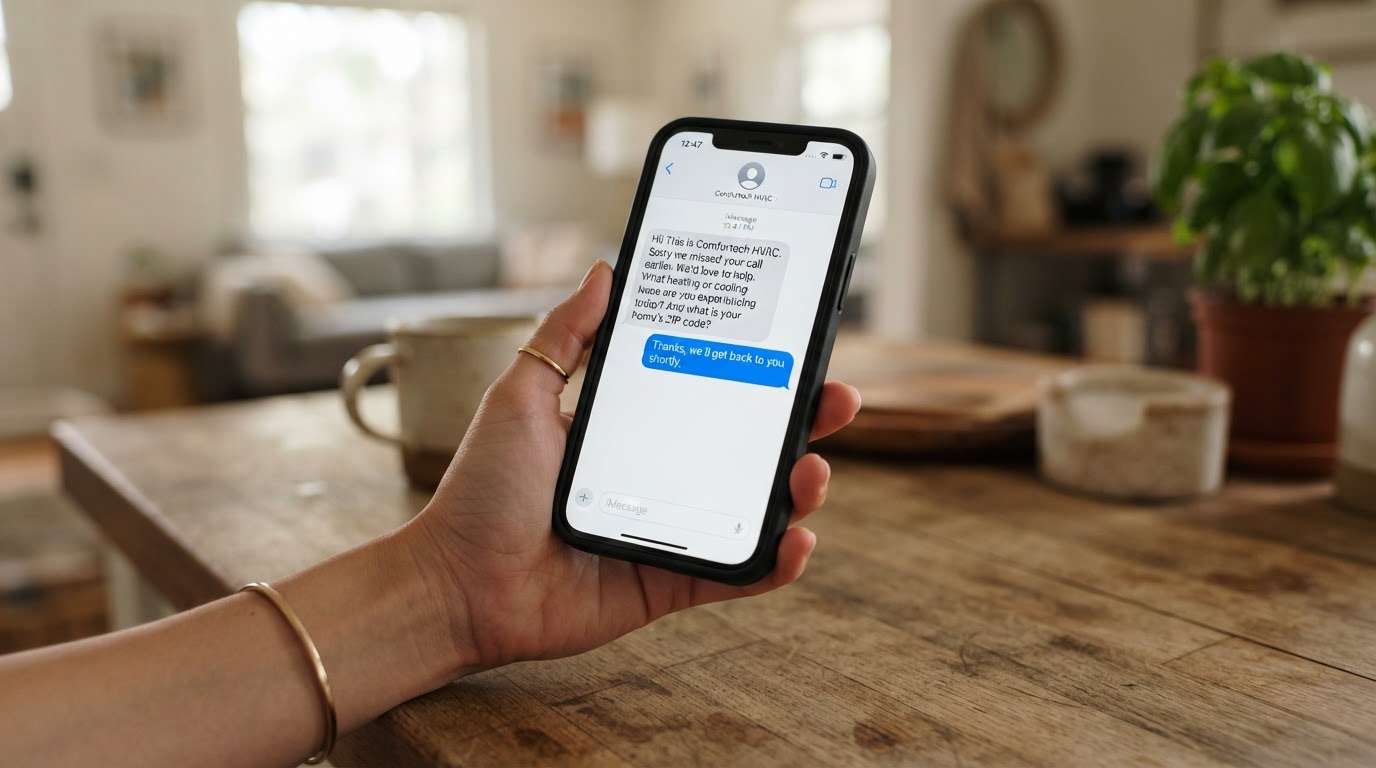
The final language should match the contractor's actual services and safety procedures. Our email and SMS marketing service is built around closing exactly this response gap for home-service businesses.
03What Information Should the Workflow Collect?
The first message should remain short. Useful information may include:
- Heating, cooling, maintenance, or estimate request
- Residential or commercial property
- Property ZIP code
- Existing or new customer
- Brief description of the issue
- Preferred callback time
Do not make the caller complete a long questionnaire. The objective is to preserve the opportunity and give dispatch enough information to respond appropriately. When connected to a calendar, the conversation can also offer the next available appointment window — the same booking layer we deploy in our appointment and calendar automation service.
04What Should the Automation Never Do?
A missed-call workflow should not:
- Claim that a technician has been dispatched before confirmation
- Promise an exact arrival time without calendar approval
- Diagnose gas, electrical, or carbon-monoxide hazards
- Quote a final repair price based on an incomplete description
- Continue sending messages after an opt-out
- Treat a service inquiry as consent for recurring promotions
- Send the same response repeatedly when someone calls several times
These boundaries protect both the customer and the HVAC company. Safety-related messages should always instruct callers to contact emergency services or the appropriate utility when a hazard is suspected rather than relying on an automated conversation.
05A Realistic Sanger HVAC Scenario
Imagine a Sanger homeowner calling an HVAC contractor at 6:20 p.m. because the air conditioner is blowing warm air. The technician on duty is finishing another appointment and cannot answer. The homeowner immediately receives a text asking for the problem and property ZIP code.
The homeowner replies with a short description. The workflow creates an after-hours cooling request in the CRM and alerts the dispatcher. The dispatcher reviews the request and confirms whether the company can provide a visit or callback.
If the caller mentions a burning smell, suspected gas leak, or another possible hazard, the automation follows the company's approved safety process. It does not attempt to troubleshoot the problem. This scenario is illustrative — every workflow should reflect the contractor's actual staffing, territory, and emergency procedures. See the full lead-capture architecture in our missed-call text-back automation guide.
Stop Losing Sanger HVAC Calls to Voicemail
We'll map your missed-call workflow, wire the text-back automation, and connect it to your CRM and dispatch — done-for-you on a flexible monthly subscription that keeps your team in control.
06Benefits Beyond the Initial Response
Faster acknowledgement. The customer knows the company received the call, even if an employee cannot respond immediately.
Better dispatch information. Staff receives a structured record containing the service category, location, and customer's description instead of an incomplete voicemail.
Cleaner CRM records. The call, text conversation, source, and next action remain connected to the same contact — see our CRM and pipeline automation service for the record-keeping layer.
Consistent follow-up. If the customer does not book immediately, the system can create a staff task so the opportunity is not forgotten.
Better marketing attribution. When call tracking is configured correctly, the company can identify whether an inquiry came from organic search, advertising, a local landing page, or another campaign.
07How to Prevent Common Failures
Suppress duplicate responses. A caller may hang up and call again. The workflow should include a suppression period so it does not send the same text after every attempt.
Recognize existing customers. A customer with an active job may need a different response from a new lead. CRM status and existing appointments should influence the workflow.
Handle opt-outs automatically. Recognized STOP requests should prevent future automated marketing messages. Transactional communication and promotional consent must remain separate.
Monitor integration failures. If the CRM, phone system, or notification channel fails, the workflow should create an error alert. A silent failure can cause the company to lose the exact lead the system was designed to protect. Our workflow and integration automation service builds these routing and monitoring rules.
Assign responsibility. Every lead category needs an owner. Automation cannot repair a process in which nobody is responsible for the callback.
08What Does Implementation Require?
A typical missed-call system includes:
- A compatible business phone platform
- SMS capability
- Required messaging registration
- CRM or structured lead database
- Service-area rules
- Business-hour and after-hours logic
- Dispatch notifications
- Approved text templates
- Opt-out handling
- Duplicate-call suppression
- Workflow monitoring
Some HVAC companies can retain their current public number through forwarding or integration. Others may need a separate messaging-enabled number. The correct configuration depends on the existing carrier and phone system. Our automation audit and consulting service can scope this end-to-end before you commit to a build.
09How Should an HVAC Company Measure Success?
Monitor the following:
- Percentage of missed calls receiving a response
- Caller reply rate
- Time to human follow-up
- Qualified service requests created
- Booked jobs connected to missed calls
- Duplicate or incorrectly routed conversations
- Opt-outs and complaints
- Workflow failures
Compare these measurements with a baseline from before the automation was launched. For example, if the company received 60 missed calls during the previous month, determine how many callers left messages, received callbacks, and ultimately booked. After launching text-back, compare the same stages. Revenue or conversion claims should only be made after comparing a documented baseline with a defined post-launch period — the same measurement discipline we describe in our small business automation guide.
10SMS Consent and Compliance
Businesses using automated text messaging must follow applicable telecommunications and privacy requirements. At a minimum:
- Clearly identify the business
- Explain the purpose of the conversation
- Provide opt-out instructions and honor STOP requests promptly
- Separate service communications from promotional consent
- Never treat a service inquiry as consent for recurring promotions
- Control message frequency
- Keep customer information secure
A missed-call response related directly to the customer's call is different from enrolling that person in a long-term promotional campaign. Do not treat one missed call as unlimited permission to send marketing texts. Have your specific workflow and disclosure language reviewed by qualified counsel. The Federal Communications Commission publishes consumer-facing guidance on the Telephone Consumer Protection Act that is a useful starting point.
11Stop Letting Voicemail End the Conversation
Sanger HVAC companies do not always need more leads. Sometimes they need a better system for responding to the calls they already receive. Missed-call text-back gives contractors a second opportunity to connect with homeowners who might otherwise call someone else, while keeping dispatch in control of every safety and scheduling decision.
Wootomatic builds missed-call, CRM, and dispatch workflows for HVAC and home-service companies in Sanger and across the Central Valley. Explore email and SMS marketing for Sanger businesses, learn about CRM and pipeline automation, or review our pricing and plans to see how a managed subscription fits a working HVAC shop's budget.
Key Takeaways
- A missed HVAC call in Sanger often becomes a lost job — homeowners without heat or cooling usually call the next contractor when no one answers.
- Missed-call text-back sends an automated SMS within seconds, collects the service type and ZIP code, and creates a structured lead for dispatch.
- The automation must never diagnose gas, electrical, or carbon-monoxide hazards, nor promise an appointment that has not been confirmed.
- Suppress duplicate responses, recognize existing customers, handle STOP opt-outs, and monitor integration failures so a silent error never costs you a lead.
- Track reply rate, time to follow-up, booked jobs, and opt-outs against a pre-launch baseline before making any revenue claim.
Frequently Asked Questions

Written by Moise
Founder & Lead Automation ArchitectMoise is the founder and lead automation architect at Wootomatic. With over a decade of hands-on experience designing, implementing, and maintaining high-throughput business automations, CRM pipelines, and custom AI agents, he has architected mission-critical workflows for hundreds of appointment-based and field-service businesses. His focus is on resilient, monitored systems that produce measurable ROI without fragile software bloat.
Put This Into Practice
We build and manage these automations for service businesses on a flexible monthly subscription. Explore the related service to see how it works: