On This Page
Workflow Automation for Logistics Companies in Stockton: Connect Your Warehouse, CRM, and Shipping
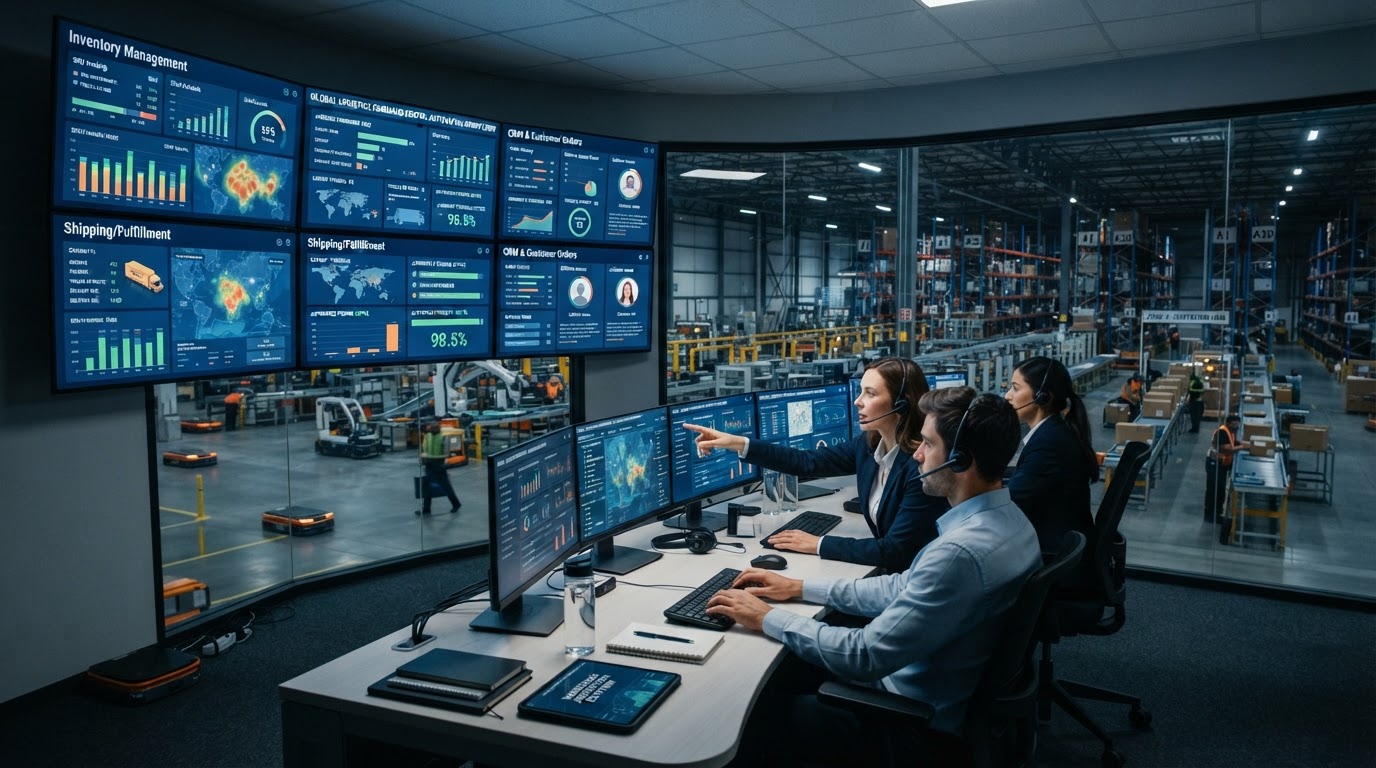
Stockton sits at the crossroads of Northern California logistics. Its position at the Port of Stockton and along the I-5 and Highway 99 corridors has made it a warehousing and distribution hub — and that means Stockton logistics companies run on data moving between systems. An order comes in, someone manually enters it into the warehouse system, then into the shipping system, then emails the customer the tracking number. Each manual handoff is a chance for an error, a delay, or a lost order. After automating workflows for logistics companies across the Central Valley, we've seen the same result: connecting inventory, shipping, and CRM systems with automated workflows eliminates 80–90% of manual data entry and the errors that come with it.
01The Manual-Handoff Problem
Logistics is a data-intensive business, and most Stockton companies move that data manually between systems. An order arrives in the CRM, an employee copies it into the warehouse management system, another enters it into the shipping platform, and a third emails the customer the tracking number. Four manual steps per order, dozens of orders a day — and each step is a chance for a typo, a delay, or a missed update.
According to Gartner's supply chain research, manual data entry errors cost logistics companies 3–5% of revenue annually — wrong addresses, missed shipments, duplicate orders, and the labor to fix them. For a Stockton logistics company doing $2 million in annual revenue, that is $60,000–$100,000 a year in preventable losses.
02What Workflow Automation Connects
A logistics workflow connects the systems that currently require manual handoffs, each connection eliminating a category of error. CRM to warehouse: an order creates a warehouse record automatically, eliminating duplicate entry. Warehouse to shipping: a packed order generates a label and tracking, eliminating shipping errors. Shipping to customer: the tracking number emails the customer automatically, eliminating manual update emails. Inventory to CRM: low stock alerts the sales team, preventing overselling. Returns to refund: a return logged triggers the refund workflow, speeding returns and reducing errors.
The goal is not more tools — it is fewer manual handoffs between the tools you already use. Our workflow and integration automation service is built around exactly this system connection. Read our small business automation guide for the prioritization framework.
Ready to Automate Your CRM & Pipeline?
We build and manage crm & pipeline automation for service businesses — done-for-you on a flexible monthly subscription.
03The Stockton Logistics Market
Stockton's logistics market has specific characteristics that make workflow automation especially valuable. The Port of Stockton drives import/export volume that requires precise tracking and documentation — manual processes cannot keep up. The city's warehousing sector handles high order volumes where manual entry errors compound quickly. Many Stockton warehouses fulfill e-commerce orders where speed and accuracy are expected — manual processes fail both. And logistics margins are thin, so the 3–5% of revenue lost to manual errors is often the difference between profit and loss.
For the local context, see our Stockton service area page and our workflow automation for Stockton businesses.
04Cost, ROI, and Deployment
Workflow automation for a logistics company is one of the clearest ROI deployments because the savings are measurable. A visual workflow builder ($100–$250/month) plus integration connectors ($50–$150/month) totals roughly $150–$400/month, with error handling, alerts, and managed setup included — versus 80–90% of manual entry eliminated. A workflow that saves 30 hours a week of manual entry at $20/hour returns $2,400/month, plus the 3–5% of revenue saved from eliminated errors. See our pricing page for the managed subscription model.
Deployment prioritizes the highest-ROI handoff first. Week one is audit and mapping: map your order flow from CRM to warehouse to shipping to customer and identify the highest-friction handoff. Week two is build and connect: build the workflow, connect your systems, and test end-to-end with sample orders. Week three is a soft launch with monitoring and error alerts. Week four is full launch and scoping the next workflow. Every workflow needs built-in retries and alerts so a failed API call does not silently lose an order.
05A Stockton Fulfillment Company's Result and What Stays Human
A Stockton e-commerce fulfillment company was entering orders manually across three systems — CRM, warehouse management, and shipping. Each order required four manual steps, and they processed 80 orders a day. Data entry errors caused 3–4 mis-shipments a week, each requiring a replacement shipment and a customer service call. Their manual entry consumed 30+ hours a week of staff time. We deployed workflow automation connecting the CRM, warehouse, and shipping systems end-to-end. Manual entry hours dropped by 85%, mis-shipments fell to less than one a week, and customer service calls about shipping errors dropped 70%.
What stays human: exception handling — a mis-shipped order, a damaged package, or a customer complaint needs a human to resolve. Carrier relationships — negotiating rates and managing carrier relationships requires human judgment. Strategic decisions — which carriers to use, which warehouses to expand, which markets to enter. And customer service — complex inquiries need a human's empathy and problem-solving. The automation eliminates the busywork so staff spend time on exceptions and decisions, not data entry. For companies running seasonal fulfillment surges, our promotions hub shows how to align operations with active campaigns.
Key Takeaways
- Manual data entry errors cost logistics companies 3–5% of revenue annually — for a $2M company, that is $60k–$100k a year.
- Workflow automation connects CRM, warehouse, and shipping systems end-to-end, eliminating 80–90% of manual entry.
- Stockton's port, warehouse density, e-commerce fulfillment, and tight margins make workflow automation essential.
- A full deployment costs ~$150–$400/month and returns $2,400+/month in reclaimed labor plus eliminated error costs.
- Exception handling, carrier relationships, and strategic decisions must stay human-led.
Frequently Asked Questions

Written by Moise
Founder & Lead Automation ArchitectMoise is the founder and lead automation architect at Wootomatic. With over a decade of hands-on experience designing, implementing, and maintaining high-throughput business automations, CRM pipelines, and custom AI agents, he has architected mission-critical workflows for hundreds of appointment-based and field-service businesses. His focus is on resilient, monitored systems that produce measurable ROI without fragile software bloat.
Put This Into Practice
We build and manage these automations for service businesses on a flexible monthly subscription. Explore the related service to see how it works: