On This Page
Local Business Marketing Automation: From Google Reviews to Repeat Customers
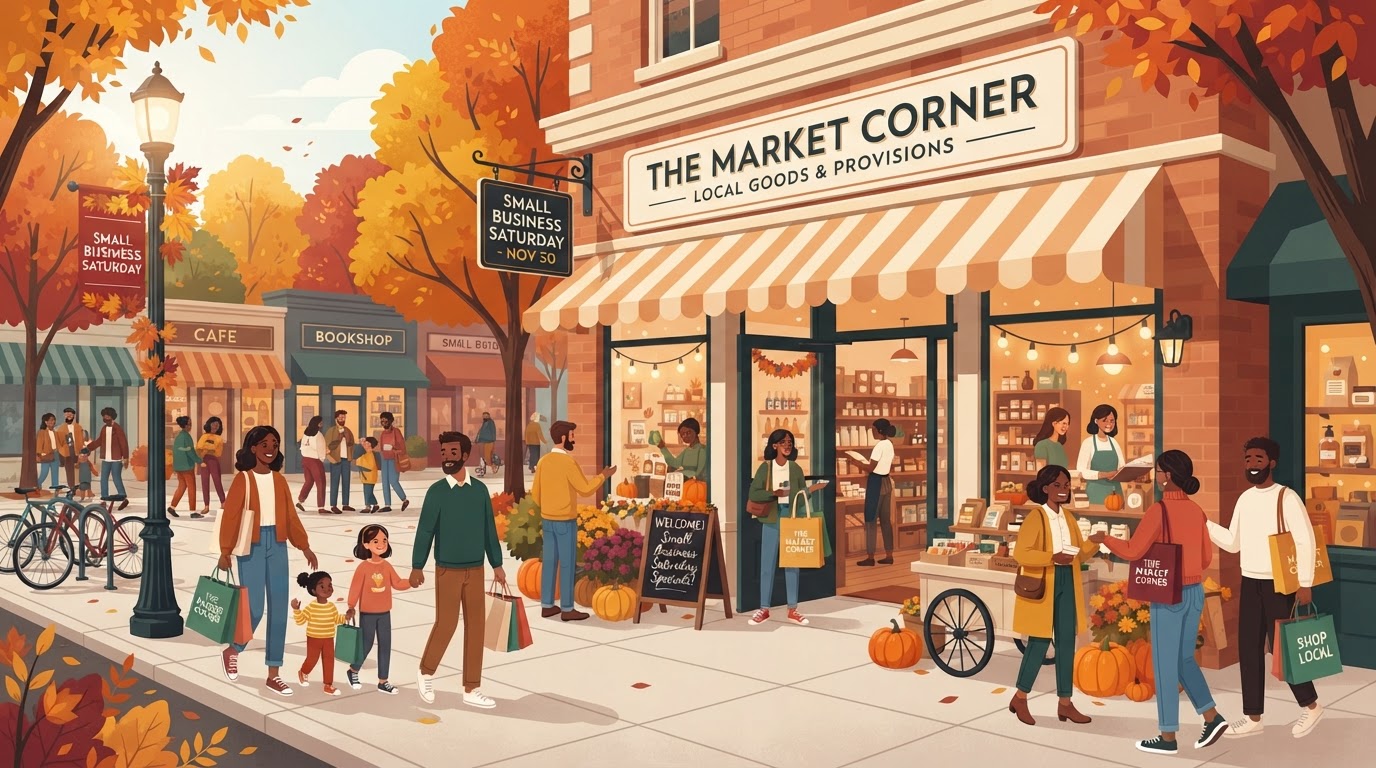
Local marketing for service businesses isn't about one big campaign — it's about the compounding effect of dozens of small, consistent touches: reviews that build trust, follow-ups that bring customers back, and local SEO that makes sure you're found. Done manually, these touches are impossible to maintain consistently. Done with automation, they run in the background and compound into a local marketing engine that works while you serve customers. This guide covers the full local marketing automation framework — from Google reviews to repeat customers — with a phased implementation plan and cost ranges. For seasonal local marketing ideas, see our [Small Business Saturday promotion page](/promotions/small-business-saturday).
01The Local Marketing Automation Stack
Local marketing automation has four pillars, each addressing a different stage of the customer lifecycle. Build them in order — each builds on the data from the one before.
| Pillar | What It Handles | Customer Stage | Monthly Cost |
|---|---|---|---|
| 1. Local SEO | Being found in 'near me' searches | Discovery | $0–$100 |
| 2. Review automation | Building trust and social proof | Post-service | $0–$50 |
| 3. Repeat-customer nurture | Bringing customers back | Retention | $30–$100 |
| 4. Re-engagement | Recovering dormant customers | Win-back | $0–$50 |
The four pillars work together. Local SEO brings new customers in; review automation converts them into trust signals that bring more in; repeat-customer nurture keeps them coming back; re-engagement recovers the ones who drift away. A business with all four pillars running has a self-reinforcing local marketing engine — new customers in, existing customers back, dormant customers recovered — all running automatically.
The cost is remarkably low: $30–$300/month for a system that replaces what would otherwise require a dedicated marketing coordinator. According to BrightLocal's Local Consumer Review Survey, 98% of consumers read online reviews before choosing a local business, and 76% trust reviews as much as personal recommendations — making review automation the highest-ROI pillar for most local businesses.
02Pillar 1: Local SEO Automation
Local SEO is the foundation — if customers can't find you in 'near me' searches, the other pillars have no one to work with. The automation focuses on keeping your local presence consistent and updated across all the places customers search.
Google Business Profile automation. Your Google Business Profile is the single most important local SEO asset — it's what appears in the map pack for 'near me' searches. Keep it updated automatically: sync your business hours, services, and photos from your CRM so the profile is always current. Post weekly updates (offers, tips, photos) to keep the profile active — Google rewards fresh content with better visibility. According to Google's own local SEO guide, complete and active profiles rank significantly higher in local results.
Review velocity. The rate at which you accumulate new reviews is a local SEO ranking factor — a business that gets 5 new reviews per month ranks higher than one with the same total but no recent reviews. Review automation (covered in Pillar 2) feeds this directly: a steady stream of new reviews signals to Google that your business is active and trusted.
Local directory consistency. Your business name, address, and phone number (NAP) must be identical across all local directories — Google, Yelp, Apple Maps, Bing Places, and industry-specific directories. Inconsistencies confuse search engines and hurt rankings. Automate directory updates where possible (some support API sync); for manual directories, maintain a single source of truth in your CRM and update all directories from it. Our service area pages demonstrate the local SEO structure that helps businesses rank in specific markets.
03Pillar 2: Review Automation
Review automation is the highest-ROI pillar because it simultaneously builds trust (for new customers) and improves local SEO (for search visibility). The architecture is straightforward: after each completed service, an automated SMS requests a review with a direct link.
Timing matters. Send the review request within 24 hours of service completion, while the positive experience is fresh. A request sent a week later gets a fraction of the response rate. The request should be short and specific: 'Hi [name], thanks for visiting [business]! If you had a great experience, we'd love a review at [link]. It takes 30 seconds and means a lot to us.'
Smart routing. Not every customer should be asked for a review. Route based on satisfaction: if a post-service survey indicates a happy customer, send the review request. If it indicates an unhappy customer, route to a human for follow-up instead — don't ask a dissatisfied customer to post a public review. This requires a brief satisfaction check (a 1–5 rating) before the review request, which can be automated. Our reputation management service builds this smart routing as a standard deliverable.
Response automation. When a review comes in (positive or negative), an automated workflow notifies your team and, for positive reviews, can draft a thank-you response for approval. For negative reviews, it alerts the owner immediately for a personal response — never auto-respond to a negative review. The speed of your response to reviews (especially negative ones) signals to both customers and Google that you're an engaged, responsive business.
04Pillar 3: Repeat-Customer Nurture
Acquiring a new customer costs 5–7x more than retaining an existing one, yet most local businesses invest all their marketing in acquisition and none in retention. Repeat-customer nurture automation flips this: it systematically brings existing customers back, at a fraction of the acquisition cost.
Service-cycle-based nurture. Different services have different natural return cycles — a haircut every 4 weeks, a dental cleaning every 6 months, an HVAC tune-up annually. Automate reminders based on each service's cycle: 'Hi [name], it's been about 6 months since your last cleaning — time to schedule your next one? Book at [link].' These reminders are helpful, not pushy, and they capture the demand that would otherwise go to a competitor who happens to be top-of-mind when the customer realizes they're due.
Value-add touches between visits. Between service cycles, send occasional value-add messages — a tip related to your service, a seasonal reminder, or a relevant resource. These keep your business top-of-mind without being purely transactional. A landscaping business might send a seasonal lawn-care tip; a dental office might send a holiday-season oral health reminder. The goal is to be the business the customer thinks of when they need your service — and that requires consistent, helpful presence.
Loyalty automation. For businesses with frequent repeat customers, automate a loyalty program: track visits, send a reward after a threshold (every 5th visit, etc.), and notify the customer when they're one visit away from a reward. This gamifies the return cycle and gives customers a concrete reason to choose you over a competitor. Our email and SMS marketing service builds these nurture and loyalty sequences.
05Pillar 4: Re-Engagement of Dormant Customers
Every local business has dormant customers — people who used your service once and never returned. Most businesses never pursue them, assuming they're lost. But automated re-engagement can recover a significant share at near-zero cost.
Dormancy detection. Your CRM identifies customers who haven't booked in a defined period (60, 90, or 180 days, depending on your service cycle). This is automated — the CRM flags dormant customers based on their last service date, no manual tracking required.
Re-engagement sequence. Send a 2–3 message sequence to dormant customers: a 'we miss you' message with a check-in, a value-add or tip, and a 'come back' offer (a discount, a free add-on, or a bundled package). The offer gives them a reason to return; the value-add shows you're not just chasing a sale. According to Bain & Company's customer retention research, a 5% increase in retention increases profits by 25–95% — making re-engagement one of the highest-ROI automations available.
Win-back tracking. Track how many dormant customers return after the sequence, and calculate the recovered revenue. This data tells you whether the re-engagement offer is working and lets you optimize it over time. The businesses that track win-back rates consistently outperform those that send the sequence and hope — because they can see which offers and timing produce the best recovery rate.
06The Phased Implementation Plan
Build the four pillars in phases, prioritizing the highest-ROI first:
Phase 1 (Weeks 1–2): Review automation. Deploy automated review requests after each service, with smart routing based on satisfaction. This is the fastest-deploying, highest-ROI pillar — most businesses see a 3–5x increase in review volume within the first month. Cost: $0–$50/month.
Phase 2 (Weeks 3–4): Repeat-customer nurture. Deploy service-cycle-based reminders and value-add touches. This brings existing customers back systematically, capturing demand that would otherwise go to competitors. Cost: $30–$100/month.
Phase 3 (Weeks 5–6): Local SEO automation. Automate Google Business Profile updates, ensure NAP consistency across directories, and maintain review velocity. This improves your visibility in local searches, feeding new customers into the pipeline. Cost: $0–$100/month.
Phase 4 (Weeks 7–8): Re-engagement. Deploy dormant-customer detection and the win-back sequence. This recovers revenue from customers you've already acquired but lost — the lowest-cost revenue available. Cost: $0–$50/month.
Total: 8 weeks, $30–$300/month. The result: a self-reinforcing local marketing engine — new customers in (SEO), trust built (reviews), customers retained (nurture), and dormant customers recovered (re-engagement). The automation audit and consulting service maps your specific business to this phased plan.
07Failure Cases and Limitations
The most common failure is asking every customer for a review, including dissatisfied ones. A business automates review requests without satisfaction routing, and a few unhappy customers post negative reviews that damage the business's reputation more than the positive reviews help. The fix: always include a satisfaction check before the review request, and route dissatisfied customers to human follow-up instead. Our AI chatbot human handoff guide covers the escalation framework that applies here.
The second failure is nurture sequences that are purely transactional. Every message is a sales pitch — 'book now,' 'come back,' 'special offer.' Customers tune out and eventually unsubscribe. The fix: mix value-add content (tips, resources, seasonal reminders) with transactional messages. The value-add content keeps customers engaged; the transactional messages convert when the customer is ready. A 3:1 ratio of value-add to transactional is a good starting point.
A limitation to acknowledge: local marketing automation requires a CRM with clean customer data. If your customer records are incomplete, duplicated, or outdated, the automations will send messages to wrong numbers, miss service cycles, and fail to detect dormancy correctly. Before deploying the framework, clean your CRM data — the CRM migration checklist covers the data hygiene prerequisites.
08An Anonymized Example from Our Work
An auto repair shop had a loyal customer base but no system for bringing customers back. Their repeat rate was declining — customers who used to return for oil changes and maintenance were drifting to quick-lube chains that sent reminders. The shop was losing an estimated 30% of their repeat revenue to competitors who were simply more consistent with follow-up.
We deployed the four-pillar framework over 8 weeks. Review automation generated 28 new Google reviews in the first quarter (they'd had 12 total in the prior year). Service-cycle-based reminders brought maintenance customers back on schedule — their repeat rate increased from 52% to 71% within six months. Re-engagement recovered 23 dormant customers in the first quarter, each worth $300–$800 in annual service revenue. The local SEO improvements moved them from position 7 to position 3 in the local map pack for their primary service keyword, increasing new-customer inquiries by 40%. The total automation stack cost $220/month and generated an estimated $4,200/month in recovered and retained revenue — a 19x return. The shop owner's reaction: 'I didn't realize how many customers I was losing just by not staying in touch.'
09Building a Local Marketing Engine
Local marketing isn't about one big push — it's about the compounding effect of consistent, automated touches across the customer lifecycle. The four-pillar framework — local SEO, review automation, repeat-customer nurture, and re-engagement — creates a self-reinforcing engine that brings new customers in, builds their trust, keeps them coming back, and recovers the ones who drift away. All for $30–$300/month, running automatically while you serve customers. If you're ready to build this engine, the automation audit and consulting service maps your business to the phased plan. And for seasonal local marketing campaigns, visit our Small Business Saturday promotion page. Because the best local marketing strategy is the one that runs consistently, without requiring your daily attention.
Key Takeaways
- Local marketing automation has four pillars: local SEO, review automation, repeat-customer nurture, and re-engagement — build in order, each builds on the prior.
- Review automation is the highest-ROI pillar: 98% of consumers read reviews before choosing a local business, and review velocity is a local SEO ranking factor.
- Always include satisfaction routing before review requests — never ask a dissatisfied customer to post a public review.
- Repeat-customer nurture captures demand at 1/5–1/7 the cost of acquisition — service-cycle-based reminders bring customers back on schedule.
- Re-engagement recovers dormant customers at near-zero cost — a 5% retention increase boosts profits 25–95%.

Written by Moise
Founder & Lead Automation ArchitectMoise is the founder and lead automation architect at Wootomatic. With over a decade of hands-on experience designing, implementing, and maintaining high-throughput business automations, CRM pipelines, and custom AI agents, he has architected mission-critical workflows for hundreds of appointment-based and field-service businesses. His focus is on resilient, monitored systems that produce measurable ROI without fragile software bloat.
Ready to Put This Into Action?
Tell us about your workflow and we'll scope a custom automation within 24 hours.