
On This Page
Automation Audit for Professional Services Firms in Fresno: Find the Workflows That Pay Back Fastest
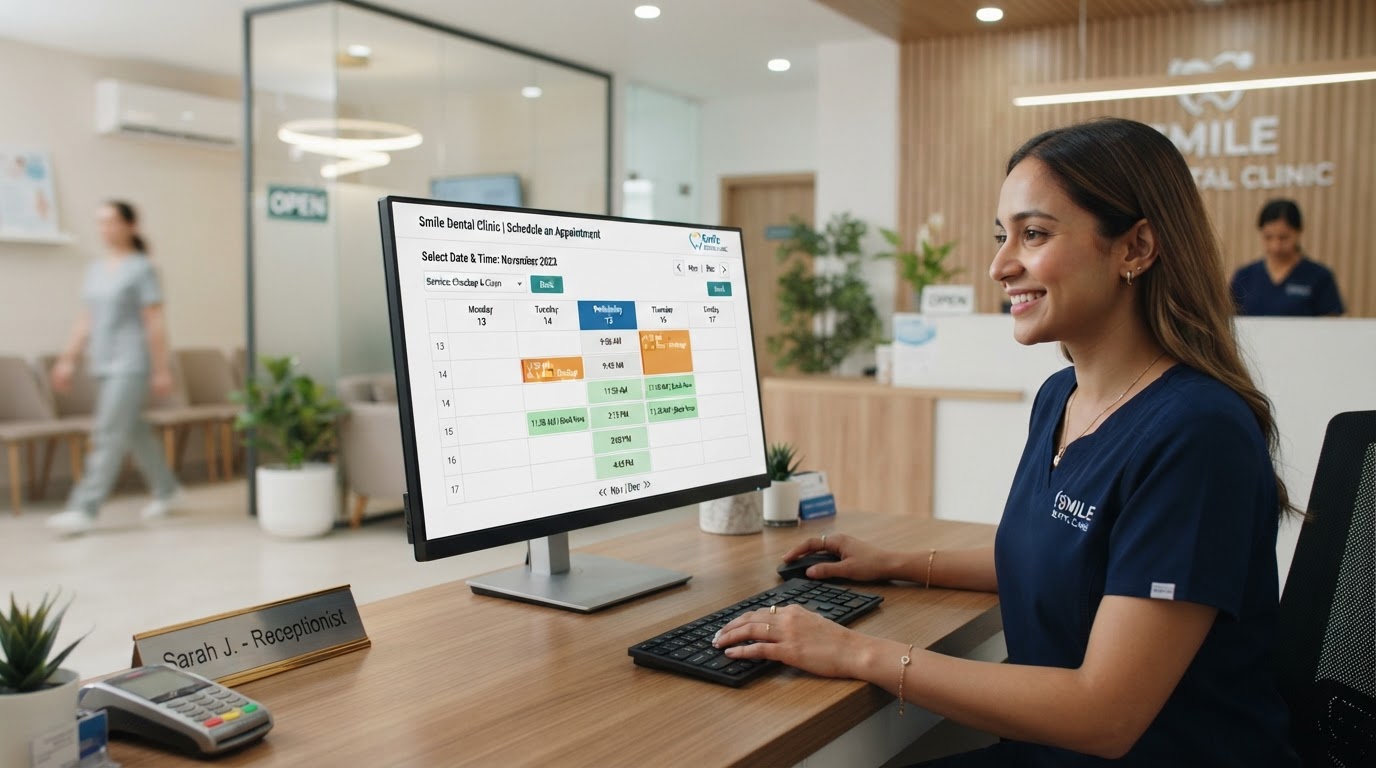
A Fresno accounting firm we worked with last year had a problem that is common across professional services: the partners knew they were spending too much time on administrative work, but they could not agree on where to start. One partner wanted to automate invoicing, another wanted to automate scheduling, and a third wanted a new CRM. They were paralyzed by options. After conducting an automation audit, the answer was clear: three workflows accounted for 80% of their administrative hours, and automating those three saved 24 hours a week — $3,600 in reclaimed capacity at their billing rate. The audit cost was recovered within the first month.
01The Paralysis of Too Many Options
Professional services firms in Fresno — accounting firms, law practices, consulting firms, engineering firms — share a common frustration: they know automation could help, but they do not know where to start. There are too many possible automations, too many tools, and too much uncertainty about which one will actually save time versus create new complexity. The result is paralysis — firms that know they need automation but never start because they cannot prioritize.
According to McKinsey's automation research, 60% of occupations have at least 30% of activities that could be automated. Professional services firms, with their high volume of document handling, scheduling, and client communication, are at the high end of that range. The problem is not that you need to automate everything — it is that without a systematic audit, you cannot tell which 30% is worth automating first. Our automation audit and consulting service is built around answering exactly that question.
02What the Audit Found at the Fresno Firm
The Fresno accounting firm we audited was spending an estimated 30 hours a week on administrative work across three partners and four staff. The audit mapped every workflow — client intake, onboarding, document collection, invoicing, reporting, scheduling, and client communication — and measured the time and error rate for each. The findings were clear: three workflows accounted for 80% of the administrative hours. Client onboarding consumed 8 hours a week (questionnaires, contract generation, first-invoice setup). Report generation consumed 7 hours a week (manually compiling data into client reports). And scheduling consumed 6 hours a week (phone-tag to book client meetings).
The audit delivered a prioritized roadmap: automate onboarding first (highest hours, clearest path), then reporting (high hours, measurable ROI), then scheduling (lower hours but high frustration). The combined savings: 24 hours a week — $3,600 in reclaimed capacity at their $150/hour billing rate. Read our small business automation guide for the prioritization framework.
03What an Automation Audit Actually Does
An automation audit is not a software demo or a sales pitch. It is a structured mapping of your firm's operations that identifies where time is spent, where errors occur, and where automation will have the highest ROI. The process has four steps. First, we map your workflows end-to-end — documenting every step, every handoff, and every system involved. Second, we measure time and error rates — how many hours each workflow consumes, how often errors occur, and what those errors cost. Third, we identify automation opportunities — which workflows have the highest time savings, the clearest ROI, and the lowest implementation risk. Fourth, we deliver a prioritized roadmap — ranked by ROI, with implementation timelines, cost estimates, and expected outcomes for each automation.
The output is not a list of tools to buy. It is a prioritized plan that tells you exactly which workflows to automate first, what each will cost, and what each will save.
Ready to Automate Your Workflow Automation?
We build and manage workflow & integration automation for service businesses — done-for-you on a flexible monthly subscription.
04The Fresno Professional Services Market
Fresno's professional services market has specific characteristics that shape automation priorities. The city is the Central Valley's business hub, with a concentration of accounting, legal, and consulting firms serving the region's agricultural, healthcare, and small-business economy. Fresno clients expect efficient, digital-first interactions — firms that still operate on paper and email feel outdated. The city's growing small-business population means firms have more clients to manage, increasing the administrative burden. And Fresno firms compete with each other and with Bay Area firms that have already automated — operational efficiency is a differentiator.
For the local context, see our Fresno service area page and our automation audit for Fresno businesses.
05Cost and ROI
An automation audit costs $1,500–$4,000 depending on firm size — a one-time investment that pays for itself within the first implemented automation. The typical audit identifies 3–5 high-ROI workflows that, combined, save 15–30 hours per week. For a firm billing $150–$300/hour, that is $2,250–$9,000 in weekly reclaimed capacity — and the audit cost is recovered within the first month of implementation. See our pricing page for the managed subscription model.
The workflows most commonly identified in professional services audits: client intake and onboarding (automated questionnaires, contract generation, first-invoice creation), project status reporting (automated reports from project management data), appointment scheduling (self-serve booking synced to calendars), and document collection (automated requests with tracking). These are the repetitive, high-volume workflows that consume the most hours and have the clearest automation path.
06The Fresno Firm's Result
The Fresno accounting firm implemented the audit's top three recommendations: automated client onboarding (questionnaire, contract, first invoice), automated report generation, and self-serve scheduling. Combined, these saved 24 hours per week — $3,600 in weekly reclaimed capacity. The audit cost was recovered within the first month. The partners, freed from administrative work, focused on client strategy and business development — and the firm took on 15% more clients without adding staff.
For firms exploring seasonal service promotions, our promotions hub shows how to align offers with active campaigns.
07What Stays Human
An audit identifies administrative drudgery; the firm's professionals focus on the work that creates value. Client strategy and consulting — the actual professional work is irreducibly human. Client relationships — the trust that wins and retains clients is built by people. Quality review — automated reports need human review before they reach the client. And judgment calls — which projects to take, how to price them, how to staff them. The audit does not replace professionals; it frees them from the work that does not require their expertise. For the full framework, read our business processes to automate guide.
Key Takeaways
- 60% of occupations have at least 30% of activities that could be automated — professional services firms are at the high end.
- An automation audit maps workflows, measures time and errors, and delivers a prioritized ROI roadmap.
- The typical audit identifies 3–5 workflows that save 15–30 hours/week — the audit cost is recovered within the first month.
- Fresno's role as the Central Valley business hub, growing client base, and competition with automated Bay Area firms make efficiency a differentiator.
- Client strategy, relationships, quality review, and judgment calls must stay human-led.
Frequently Asked Questions

Written by Moise
Founder & Lead Automation ArchitectMoise is the founder and lead automation architect at Wootomatic. With over a decade of hands-on experience designing, implementing, and maintaining high-throughput business automations, CRM pipelines, and custom AI agents, he has architected mission-critical workflows for hundreds of appointment-based and field-service businesses. His focus is on resilient, monitored systems that produce measurable ROI without fragile software bloat.
Put This Into Practice
We build and manage these automations for service businesses on a flexible monthly subscription. Explore the related service to see how it works: